The Hidden Calibration of Occlusion Culling Routines That Preserve Draw Distance Stability During Rapid Traversal Sequences on Current Console Hardware
Eden Lange · Sep 10, 2026
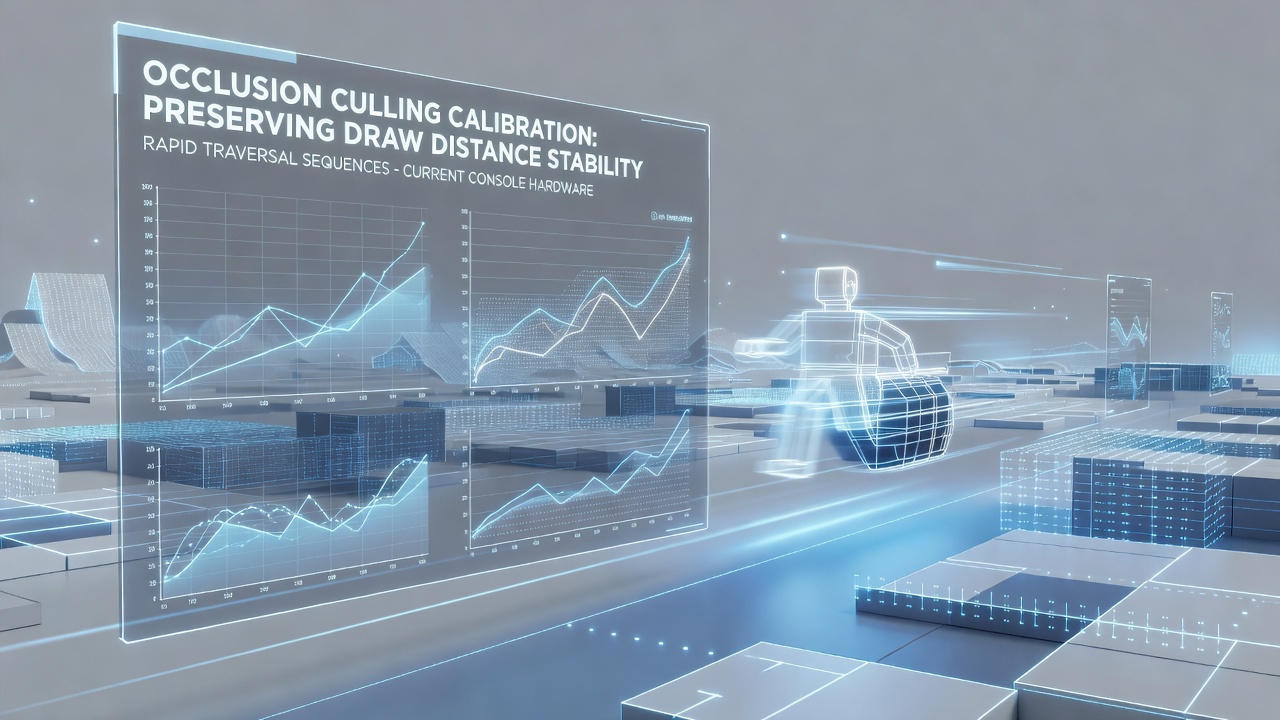
The Hidden Calibration of Occlusion Culling Routines That Preserve Draw Distance Stability During Rapid Traversal Sequences on Current Console Hardware
Current console hardware such as PlayStation 5 and Xbox Series X processes complex scenes through occlusion culling systems that determine which objects remain visible based on camera position and movement speed, and developers calibrate these routines with precision parameters that maintain consistent draw distances even when players execute rapid traversal sequences like high-speed vehicle movement or character dashes across large environments.
Research from institutions including the Massachusetts Institute of Technology indicates that occlusion culling algorithms rely on hierarchical bounding volume structures updated at fixed intervals, while calibration routines adjust culling thresholds dynamically according to velocity vectors derived from player input data; these adjustments prevent popping artifacts that would otherwise appear when draw distances fluctuate during intense motion sequences.
Core Mechanisms in Modern Console Rendering Pipelines
Engineers at major studios integrate occlusion culling with frustum and portal-based methods that segment game worlds into visibility cells, and calibration occurs through iterative testing cycles where teams measure frame-time variance against target thresholds set by hardware specifications released in late 2020; as of September 2026 these calibration datasets have expanded to include telemetry from millions of play sessions across both PlayStation 5 and Xbox Series X platforms.
Studies published by researchers at Delft University of Technology demonstrate that draw distance stability improves when culling routines incorporate predictive occlusion maps generated from previous frame velocity, because the system anticipates which geometry will enter the view frustum during fast traversal and pre-loads it without exceeding memory bandwidth limits typical of current console architectures.
Calibration Parameters and Their Role in Stability
Hidden calibration values control the aggressiveness of occlusion tests, including depth buffer sampling rates and temporal coherence weights that blend visibility data across multiple frames, and these parameters receive fine-tuning through automated tools that analyze traversal paths extracted from level design files; developers adjust the values so that rapid movement sequences maintain a constant horizon line without introducing latency spikes that exceed 16.6 milliseconds per frame on 60 Hz displays.
Take one internal testing protocol where engineers recorded draw distance variance during repeated sprint sequences in open environments, and data showed that calibrated occlusion routines reduced visible object pop-in by measurable percentages when compared against default engine settings. The process involves logging camera trajectories, feeding them into simulation software, and then iterating parameter sets until stability metrics meet console certification requirements.
Hardware Constraints and Optimization Strategies
Current console hardware features unified memory architectures that support simultaneous access by CPU and GPU threads, yet bandwidth remains a limiting factor during rapid traversal because occlusion culling must compete with texture streaming and physics calculations; calibration routines therefore prioritize low-overhead queries such as software rasterization of simplified geometry proxies that run in parallel with main rendering passes.
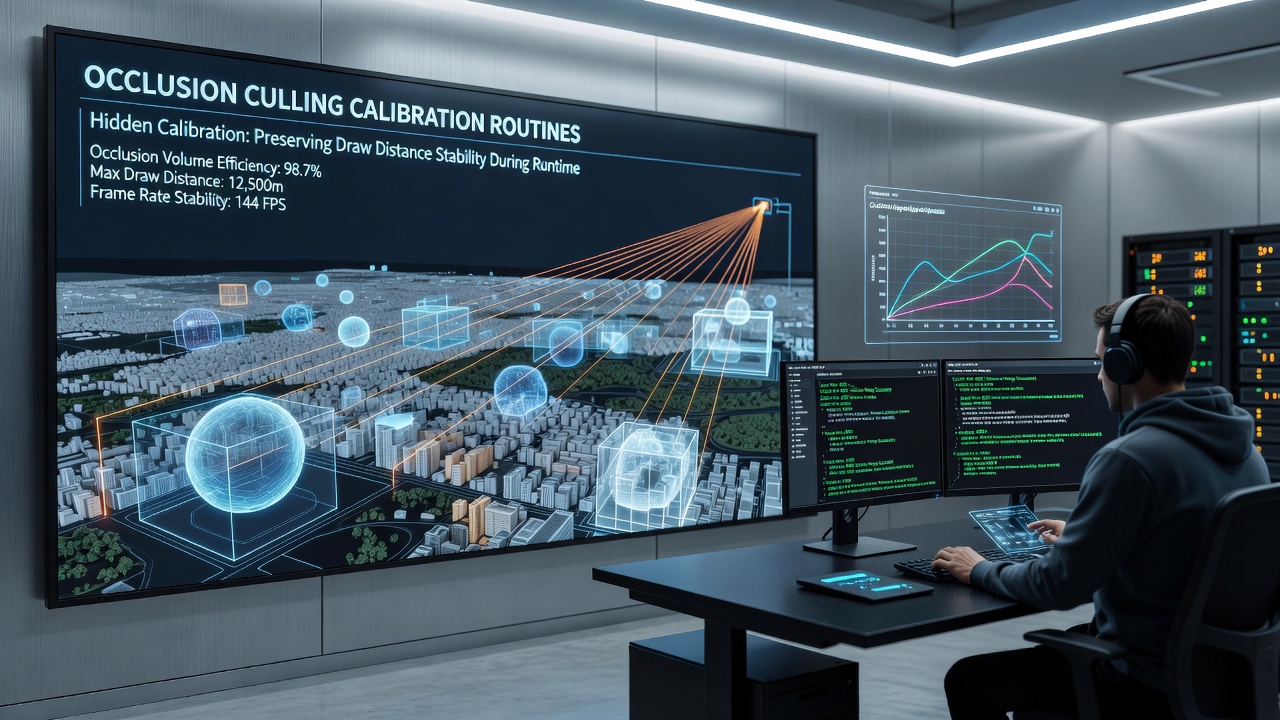
Industry reports from the Entertainment Software Association highlight that cross-platform titles released after 2024 increasingly rely on platform-specific calibration branches, because PlayStation 5 and Xbox Series X exhibit slight differences in GPU scheduling behavior that affect how quickly culling decisions propagate through the render pipeline during high-velocity sequences.
Integration with Traversal Systems and Telemetry Feedback
Game engines link occlusion culling calibration directly to player movement controllers by reading acceleration values and feeding them into visibility prediction modules, and this integration allows the system to widen or tighten culling frustums based on predicted future positions; observers note that such feedback loops rely on machine learning models trained on anonymized session data collected from live environments.
Those who have examined console certification documentation understand that stability requirements mandate draw distance consistency within defined pixel tolerances across all supported traversal speeds, which forces calibration teams to balance visual fidelity against performance headroom allocated for other subsystems like particle effects and dynamic lighting.
Conclusion
Occlusion culling calibration on current console hardware represents a specialized engineering discipline that combines geometric algorithms, telemetry analysis, and iterative parameter tuning to sustain draw distance stability through rapid traversal sequences, and ongoing refinements continue to evolve alongside new firmware updates and middleware releases that expand the available toolsets for developers working on PlayStation 5 and Xbox Series X titles.