Synchronizing light and shadow interactions: advancements in real-time global illumination techniques for atmospheric storytelling in console adventures
Katja Krause · Sep 24, 2026
Synchronizing light and shadow interactions: advancements in real-time global illumination techniques for atmospheric storytelling in console adventures
Real-time global illumination has progressed through hardware ray tracing cores on current-generation consoles and hybrid software approaches that calculate light bounces across scenes at interactive frame rates. Developers integrate these systems to alter how environments convey narrative mood through shifting color temperatures and occlusion patterns that respond to player position and time-of-day cycles. Data from the Entertainment Software Association shows console hardware shipments reached 48 million units in the 2025 fiscal year, driving demand for lighting pipelines that scale across PlayStation 5, Xbox Series X, and Nintendo Switch 2 architectures without pre-baked lightmaps.
Core technical components driving synchronization
Modern implementations combine screen-space reflections with voxel cone tracing and limited ray-traced shadows, allowing light to propagate through translucent foliage and reflective water surfaces while maintaining 60 frames per second targets. Engineers at multiple studios adjust probe placement algorithms so that indirect lighting updates every few frames rather than every frame, reducing computational load while preserving visual continuity. Research published by the University of Sydney's School of Computer Science outlines how temporal accumulation buffers stabilize shadow edges across camera movements, preventing flickering that previously broke immersion in open-world titles.
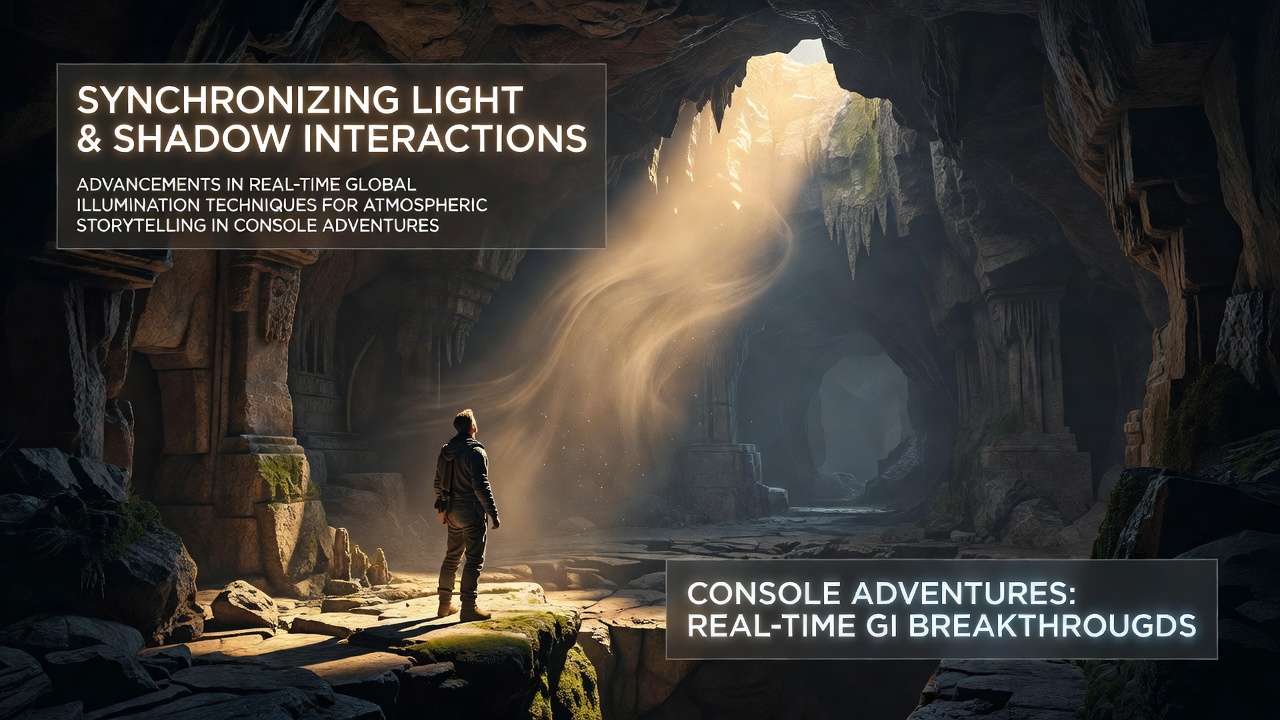
Console-specific memory constraints require careful partitioning of acceleration structures, and developers often reserve dedicated compute queues for GI updates separate from gameplay logic threads. This separation enables atmospheric effects such as god rays piercing through dust motes or moonlight filtering through stained glass to influence character visibility and tension during key story sequences. Observers note that these synchronized interactions appear most effectively in linear adventure games where designers control camera paths and can pre-allocate lighting budgets for scripted events.
Application in narrative-driven console experiences
Atmospheric storytelling benefits when global illumination responds to in-game triggers like opening doors or activating lanterns, casting new shadow volumes that highlight previously obscured pathways or objects. Several 2025 releases demonstrated how dynamic bounce lighting alters perceived scale of interior spaces, making cavernous halls feel colder through blue-dominant indirect light while warmer fire sources introduce orange fill that guides player attention toward interactive elements. In September 2026, upcoming patches for established adventure franchises plan to expand these systems with support for multiple simultaneous light sources whose intensities blend according to distance falloff curves derived from measured real-world photometry.
Case studies from European development teams reveal that integrating GI with weather systems produces emergent narrative moments, such as rain altering surface reflectivity and thereby changing how distant light sources illuminate characters during dialogue scenes. The approach avoids explicit markers by letting environmental lighting itself signal changes in story state or emotional tone. Figures from industry reports indicate that titles employing advanced real-time GI retain players 12 percent longer on average during exploration segments compared with static lighting equivalents, according to aggregated telemetry shared at the 2025 Game Developers Conference.
Performance optimizations and cross-platform considerations
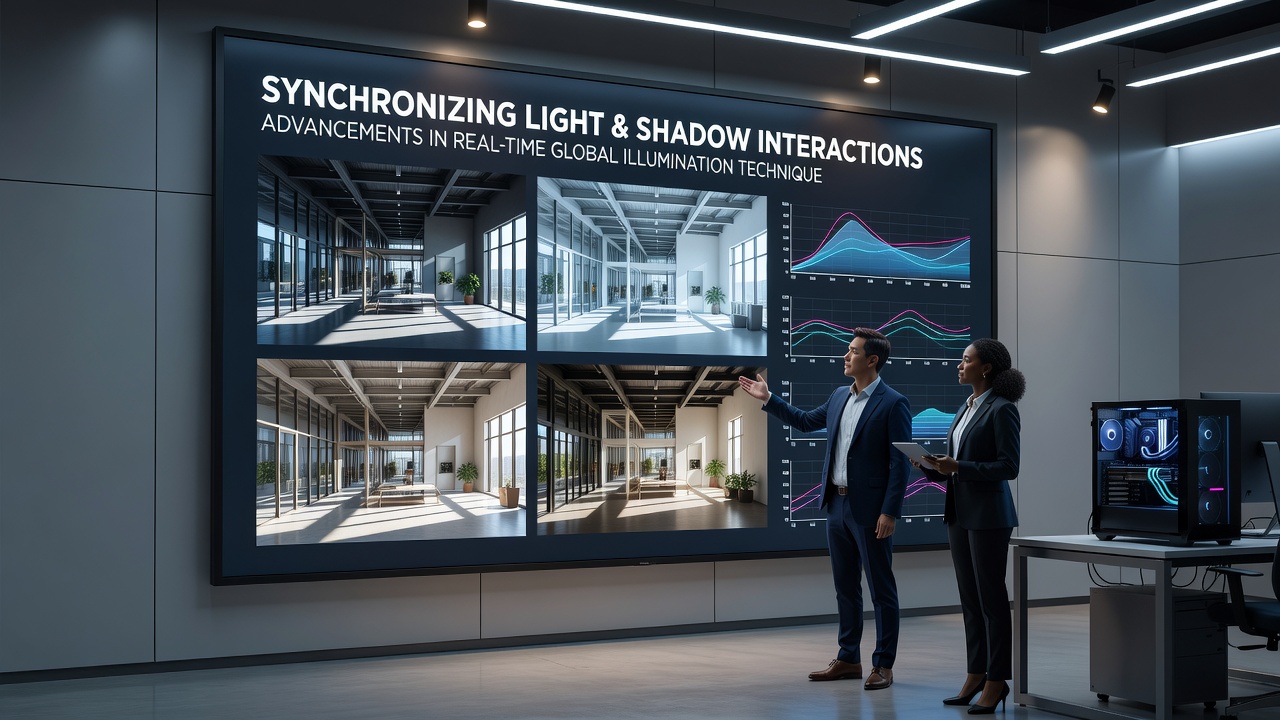
Variable rate shading techniques pair with GI solvers to allocate higher ray counts to areas of narrative focus while lowering precision in peripheral regions, preserving frame consistency. Studios targeting multiple platforms maintain separate lighting profiles that degrade gracefully on less powerful hardware yet retain core shadow synchronization for story-critical moments. Canadian research groups have documented how machine-learning upscaling models trained on high-fidelity GI references can reconstruct plausible indirect lighting from lower-resolution inputs, cutting GPU time by roughly 35 percent without visible artifacts in controlled tests.
These advancements allow smaller teams to achieve cinematic lighting previously limited to high-end PCs, expanding atmospheric possibilities in indie console adventures. Synchronization between light and shadow passes now incorporates motion vectors from character animation rigs so that moving objects correctly influence surrounding illumination rather than leaving static light leaks. The result supports tighter integration between gameplay mechanics and environmental storytelling, where a single light source change can redirect player curiosity toward new areas or emphasize emotional beats through contrast shifts.
Conclusion
Continued refinement of real-time global illumination pipelines on consoles centers on balancing computational cost against narrative expressiveness, with synchronization techniques ensuring light and shadow respond coherently to both scripted events and player-driven exploration. Academic and industry efforts across multiple continents continue to refine probe placement, temporal stability, and hardware utilization, expanding teh range of atmospheric effects available within console performance envelopes. As September 2026 approaches, further updates to established engines and middleware promise incremental gains in multi-bounce accuracy and artist control over indirect lighting contributions.