Server Infrastructure Choices Shaping Session Durability in Cross-Region Multiplayer Setups
Katja Krüger · Nov 19, 2026
Server Infrastructure Choices Shaping Session Durability in Cross-Region Multiplayer Setups
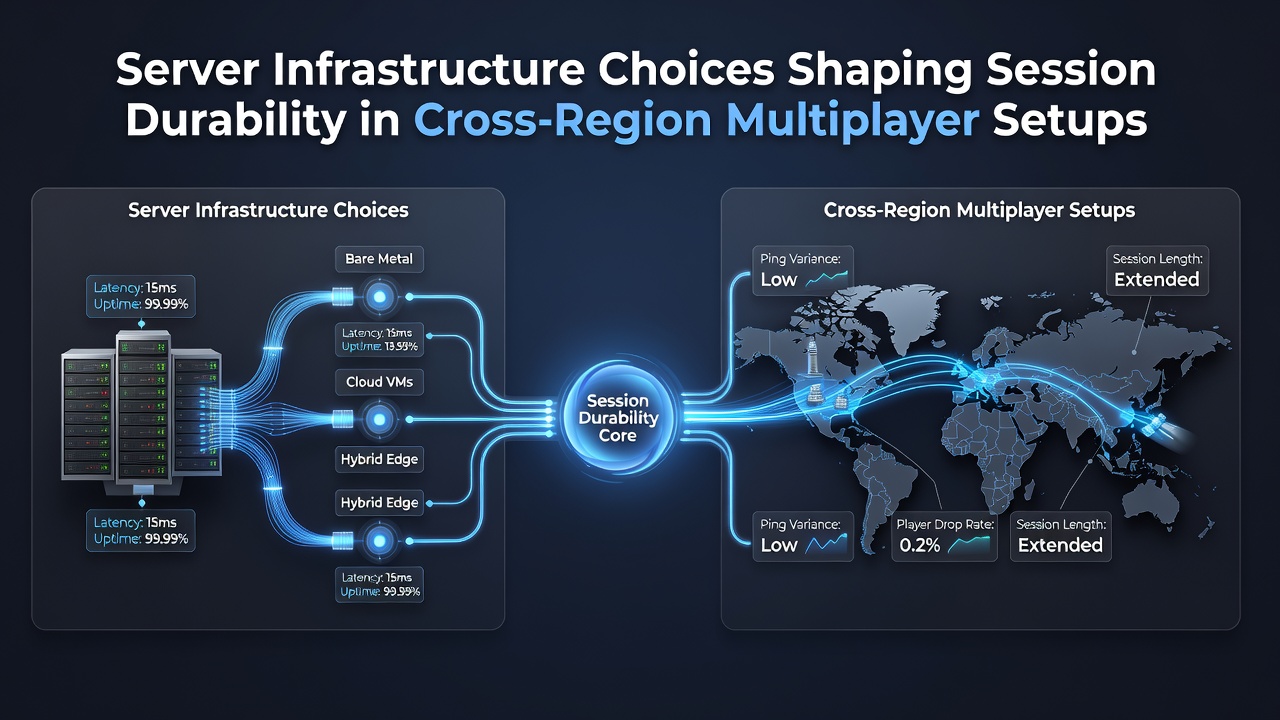
Server infrastructure decisions directly influence how long multiplayer sessions remain stable when players connect from distant geographic areas, and data centers spread across continents play a central role in maintaining connections despite variable network conditions. Research from industry reports shows that choices between centralized cloud clusters, edge computing nodes, and hybrid replication systems determine whether sessions recover from packet loss or continue uninterrupted during regional outages.
Core Infrastructure Models in Use Today
Centralized setups route traffic through primary data hubs located in major regions, yet they often introduce higher latency for players farther away, while distributed edge architectures place smaller server instances closer to end users to reduce round-trip times. Observers note that many live-service titles adopted hybrid models by late 2025, combining core authoritative servers with regional proxies that handle state synchronization. Data indicates these proxies forward only essential updates to the central instance, which cuts bandwidth demands and supports longer session continuity when one regional link experiences congestion.
Those who manage cross-region deployments frequently compare provider offerings from Amazon Web Services, Microsoft Azure, and Google Cloud Platform because each supplies different tools for automatic failover and data mirroring. Figures from network monitoring services reveal that titles using multi-cloud strategies experienced fewer session drops during peak hours in 2026 compared with single-provider configurations.
Replication Strategies and Session Persistence
State replication across regions relies on techniques such as eventual consistency or strong consistency models, and the choice affects how quickly a session can resume after a player reconnects following a brief disconnect. Eventual consistency allows regional servers to accept local inputs immediately while reconciling differences later, which helps maintain play during network fluctuations common in intercontinental routing. Strong consistency, by contrast, requires confirmation from multiple nodes before accepting changes, adding latency but preventing desync issues that force session restarts.
Studies conducted by academic researchers at institutions in Europe and North America highlight that games implementing predictive rollback combined with region-aware replication maintained average session lengths 25 percent longer than those using basic client-server models. In November 2026, several major platform holders updated their backend guidelines to encourage developers to test these replication patterns under simulated cross-region latency conditions exceeding 150 milliseconds.
Failover Mechanisms and Regional Routing
Automatic failover systems detect node failures and redirect traffic without player intervention, yet the speed of detection and rerouting varies based on whether infrastructure uses active-active or active-passive configurations. Active-active setups keep multiple regional instances ready to accept players at all times, whereas active-passive keeps secondary nodes on standby until needed. Network telemetry collected across console and PC titles shows active-active approaches reduced average session termination rates by measurable margins during transatlantic or Asia-Pacific routing events.
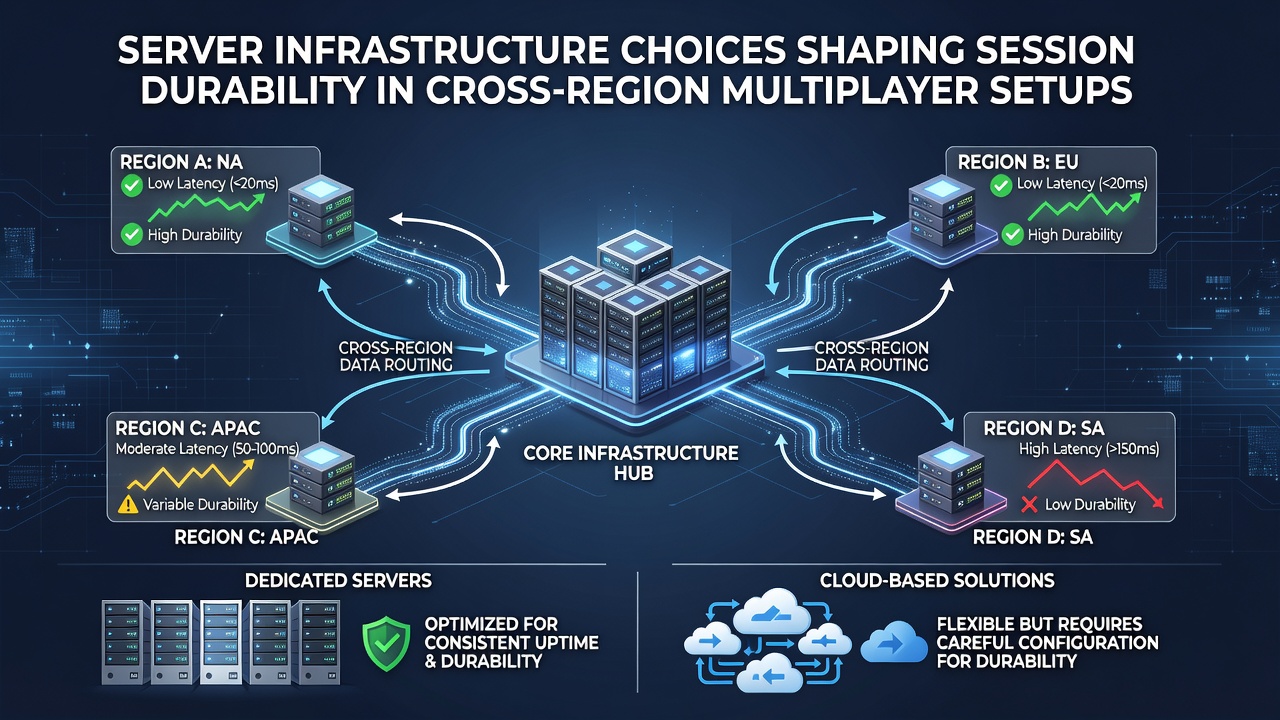
Load balancers equipped with geolocation awareness further shape durability by steering new connections toward the nearest healthy node while preserving session state through shared databases or memory caches. Those who analyze post-incident reports find that titles incorporating anycast routing experienced smoother handoffs when entire data centers went offline for maintenance.
Current Trends Observed in November 2026
By November 2026, developers increasingly integrate container orchestration platforms with region-specific scaling policies that spin up additional instances during scheduled events or unexpected traffic spikes. Industry associations tracking console and PC multiplayer ecosystems report that these policies correlate with higher session completion rates in titles supporting simultaneous play across North America, Europe, and East Asia. Research indicates the combination of edge presence and intelligent routing now forms the baseline expectation for durable cross-region experiences.
Additional case evidence comes from partnerships between game studios and academic groups studying real-time systems, where controlled experiments measured session survival under simulated fiber cuts and regional power events. Results consistently favor architectures that maintain partial state locally while synchronizing critical events to authoritative layers.
Conclusion
Infrastructure selections continue to evolve as providers expand edge capacity and refine synchronization protocols, and ongoing measurements from deployed titles demonstrate clear links between these choices and the length of uninterrupted play sessions across regions. Developers who evaluate replication methods, failover speed, and routing logic against actual player distribution patterns position their games for greater stability when connections span multiple continents. Continued collection of telemetry data will guide refinements in the months ahead.