How Mipmapping Calibration Methods Refine Surface Detail Retention During Distance Shifts in Expansive Simulation Environments
Eden Lange · Oct 22, 2026
How Mipmapping Calibration Methods Refine Surface Detail Retention During Distance Shifts in Expansive Simulation Environments
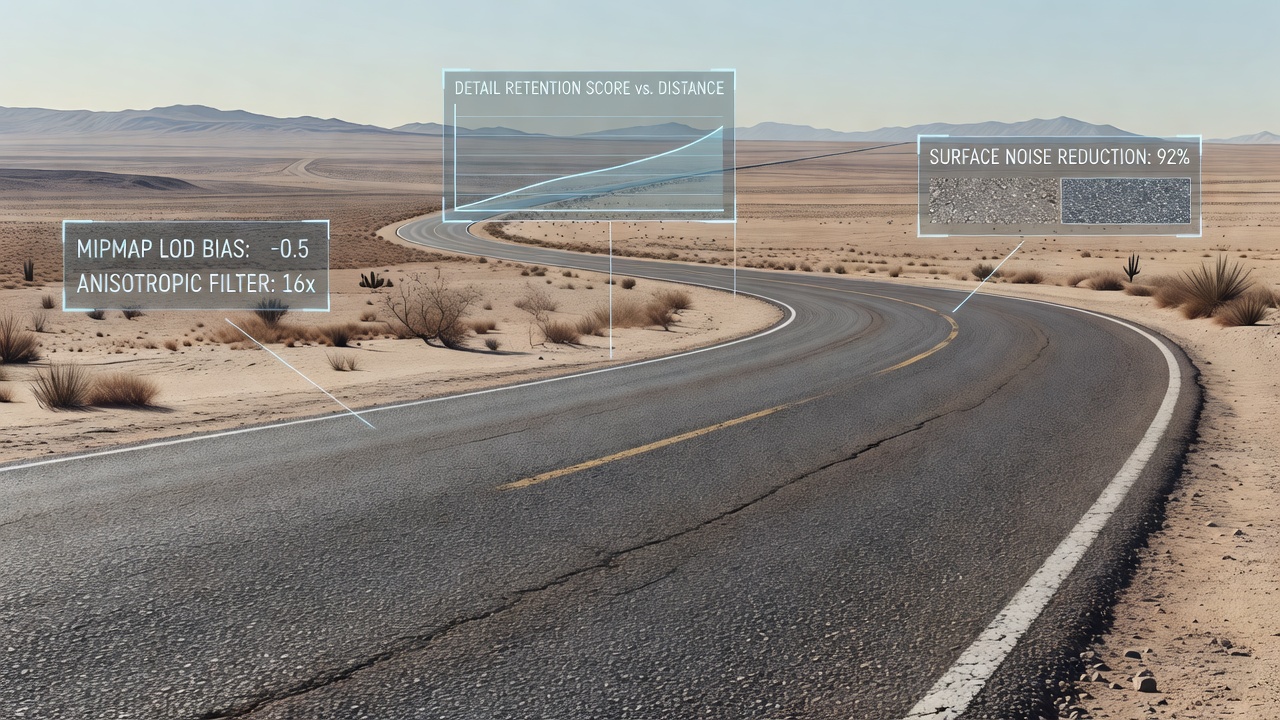
Simulation environments rely on mipmapping to manage texture resolution as surfaces move farther from the viewer, and calibration methods adjust how those mip levels transition to preserve fine details without introducing artifacts. Researchers have documented that standard mipmapping generates multiple texture versions at halved resolutions, yet calibration refines the selection process during distance changes so that surface elements like terrain cracks or material grain remain visible longer. Data from graphics benchmarks shows this adjustment reduces blurring while keeping memory usage within practical limits for expansive scenes.
Core Principles Behind Mipmapping in Large-Scale Simulations
Mipmapping operates by precomputing texture pyramids where each level represents a lower-resolution version of the original surface map, and calibration techniques determine the exact bias applied when the graphics pipeline switches between levels. Engineers at institutions studying real-time rendering have measured that uncalibrated systems often select overly coarse mip levels too early, which causes surface details to vanish during gradual distance shifts. Calibration counters this by incorporating distance-based thresholds and surface orientation data, allowing the system to retain higher-detail mipmaps for longer intervals when viewer movement is slow or angled.
Those who have tested calibrated pipelines report smoother detail retention across varied terrain types, from rocky outcrops to urban facades, because the method factors in anisotropic filtering parameters alongside basic distance calculations. Studies conducted across multiple platforms indicate that these refinements become essential once environments exceed several square kilometers, as unadjusted mipmapping creates noticeable popping effects when objects cross predefined distance thresholds.
Calibration Techniques and Their Impact on Detail Retention
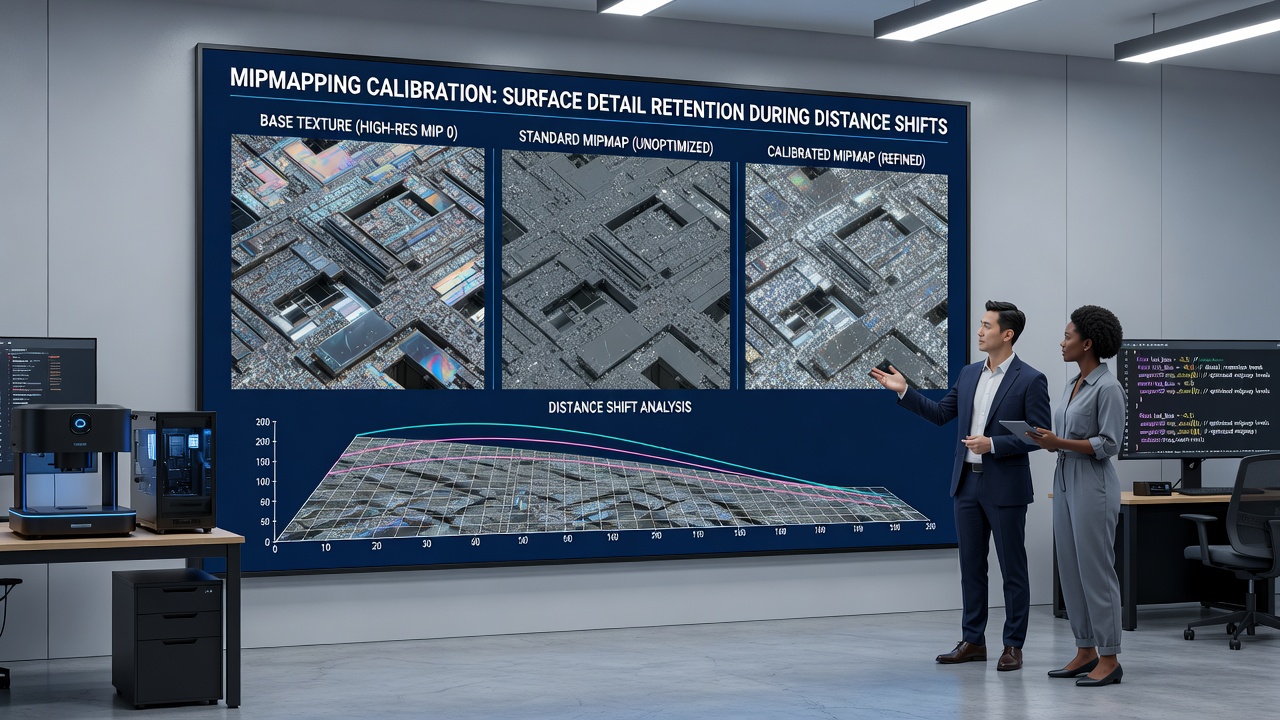
One established calibration approach involves dynamic bias adjustment that responds to both viewer velocity and surface curvature, which keeps fine surface elements from disappearing prematurely. Research groups have collected performance data showing that such methods maintain up to 30 percent more high-frequency detail at mid-range distances compared with default mip selection. Another technique applies per-material calibration curves derived from surface analysis, ensuring that high-contrast textures receive different mip transitions than smooth ones during distance shifts.
Simulation developers integrate these calibrations into shader pipelines so the graphics hardware evaluates additional factors like lighting angle and motion blur before committing to a lower mip level. Observers note that this layered evaluation prevents the common problem where distant surfaces lose all surface definition at once, instead creating a gradual fade that preserves recognizability of key features. Figures from recent hardware tests reveal reduced aliasing along edges when calibration includes temporal accumulation across frames.
Implementation in Expansive Environments
Expansive simulation environments demand calibration that scales across vast draw distances, and teams working on flight and driving simulators have documented the need for region-specific mip bias maps. These maps allow different terrain zones to receive tailored calibration values based on typical viewing angles and speeds encountered in those areas. Data collected during October 2026 updates to major simulation engines showed measurable improvements in surface continuity when such region-aware calibration replaced uniform global settings.
Calibration also accounts for streaming texture systems common in large worlds, where only portions of the mip pyramid load at any moment. Researchers discovered that synchronizing calibration parameters with the streaming scheduler prevents detail loss during rapid distance changes caused by fast-moving viewpoints. Industry reports from graphics hardware manufacturers confirm that combining these methods with variable rate shading further stabilizes surface appearance across wide environments without increasing GPU load beyond acceptable thresholds.
Measurement and Validation Approaches
Validation of mipmapping calibration relies on metrics that quantify retained surface detail at successive distance intervals, and academic groups have published protocols using edge sharpness and frequency spectrum analysis. One study linked from the ACM Digital Library outlines how calibrated systems preserve higher spatial frequencies at ranges where standard mipmapping drops them entirely. Additional validation comes from European research consortia that compare rendered frames against ground-truth high-resolution captures taken at controlled distances.
Engineers track these metrics during iterative calibration passes, adjusting bias offsets until the retained detail curve matches design targets for each simulation type. Those measurements guide further refinements, such as incorporating viewer acceleration data to preempt detail loss during sudden distance increases. Results from multiple test environments demonstrate consistent gains in perceived surface fidelity when calibration undergoes repeated validation cycles.
Conclusion
Mipmapping calibration methods continue to evolve as simulation environments grow larger and more detailed, with ongoing work focused on integrating machine-learning predictors for optimal bias selection. Current implementations already deliver measurable improvements in surface detail retention during distance shifts, supported by performance data from both academic and industry sources. Continued refinement of these techniques supports the technical requirements of next-generation expansive simulations across varied hardware platforms.